Little Red Riding Hood
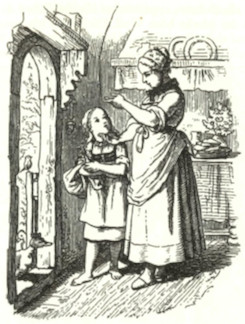
Ludwig Richter’s illustrations for Ludwig Bechstein’s “German Fairy Tale Book” (first illustrated edition 1853) are among the most defining images of German fairy tales. Richter created over 170 woodcuts for the collection—“Little Red Riding Hood” remains one of the best known to this day. At the front door, the mother urges her daughter to go straight to her sick grandmother with the basket full of cake and wine and not to stray from the path.
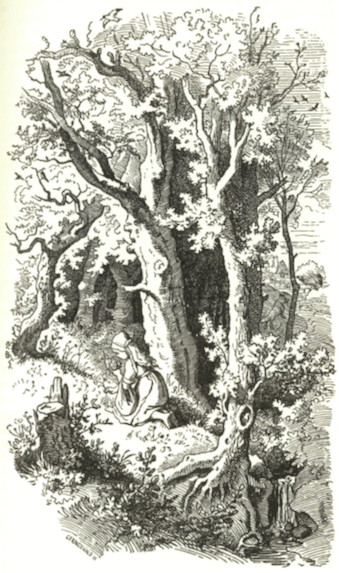
In the forest, Little Red Riding Hood is distracted by the birds and the beautiful flowers and leaves the path—she appears small and lost among the mighty trees. That is exactly what the wolf has been waiting for: While she picks flowers, he secretly hurries ahead to the grandmother.
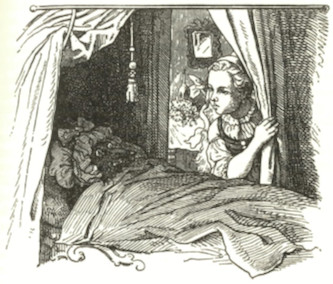
When Little Red Riding Hood arrives, the wolf, disguised as the grandmother, is already lying in bed. The famous dialogue—“Oh, Grandmother, what big ears you have”—ends with the wolf devouring the girl, until a passing hunter ultimately rescues them both safe and sound from his belly.
Images
Tap to open the gallery.