Omophorion
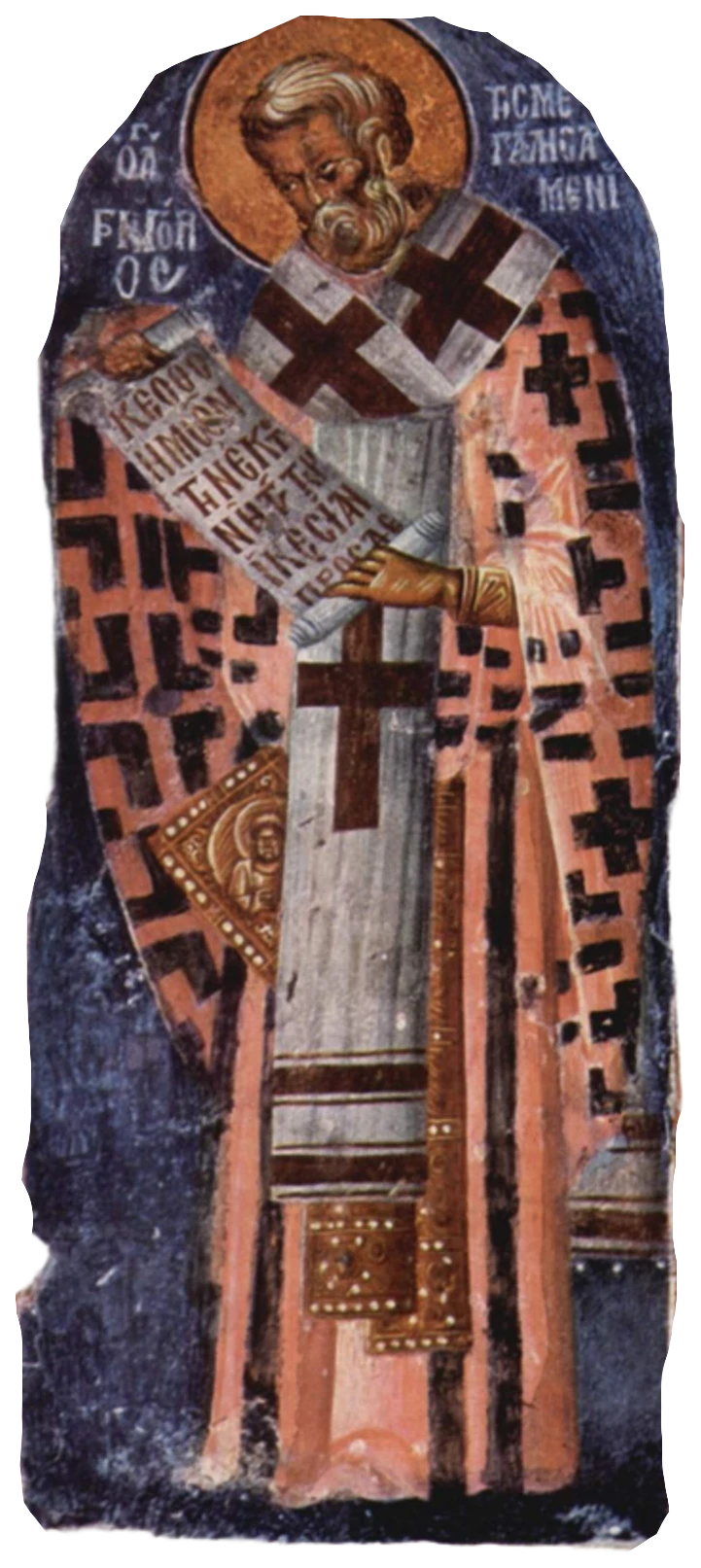
Across the shoulders of the painted bishops lies a broad white band embroidered with dark crosses. In the Eastern Churches, this cloth—the omophorion—marks the office of bishop and distinguishes the dignitary from ordinary priests at first glance. Icon painters gave their figures this cloth so that the faithful would immediately recognize the rank of the saints.
The cloth dates back to the fourth century. Bishops draped the broad woolen band around their necks so that one end hung down over the chest and the other down the back. In Christian interpretation, the wool refers to the parable of the Good Shepherd, who searches for the lost sheep and carries it home on his shoulders. The vestment reminds the wearer of his duty to protect the congregation and bring back those who have strayed. Whoever wore the omophorion visibly took upon himself the burden of caring for the people entrusted to him.
Over the centuries, splendor grew in the churches of the Byzantine Rite. Embroiderers replaced simple sheep’s wool with heavy silk and adorned the fabric with three large crosses representing the Trinity. Later, alongside the long band, a shorter version emerged: the small omophorion, which the bishop wore during longer services to move more freely. It rests like a collar around the back of the neck and falls forward onto the vestment. In both versions, the cloth remained the central symbol of episcopal authority.
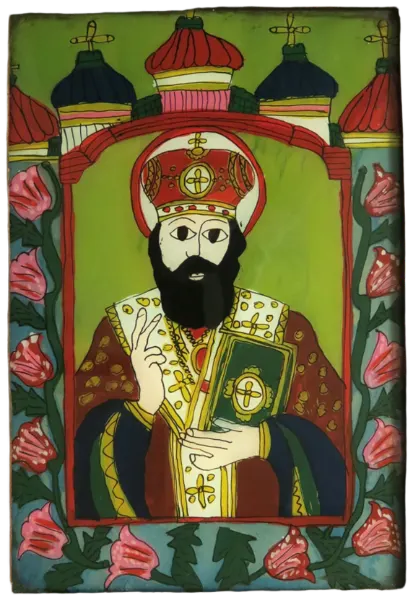
In the villages of Transylvania, nineteenth-century artisans painted saints such as Nicholas or Basil behind glass. They adopted the established pictorial patterns of Byzantine art, but simplified the lines for a quick brushstroke. The white band with the black crosses could never be missing. Even if the colors turned out brighter and the facial features more rustic than on old monastic panels, the cloth made the figure of the bishop unmistakable to every churchgoer.
Related in the museum
Provenance and rights
- Image
- Meister der Aphentico-Kirche in Mistra, Wikimedia Commons · Public Domain Mark
Meister der Aphentico-Kirche in Mistra, Wikimedia Commons · Public Domain Mark